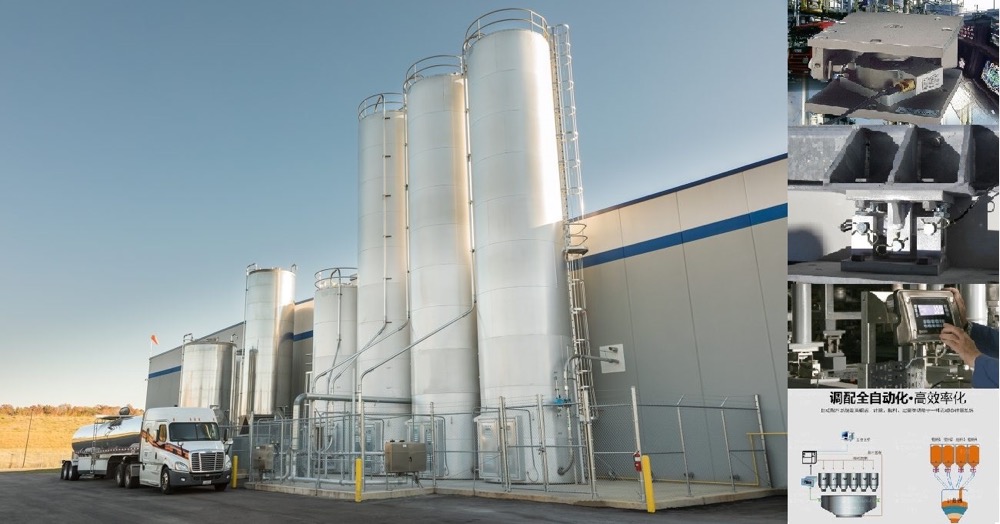






Circuit Weighing and loading equipment adopts single-loop PID control, the control parameters include: proportionality P, integral time I, differential time D, control period Ts. In addition to this, it also adopts serial loop. That is, when the output of one controller is required to change the given value of another controller, the two controllers thus connected are said to be in series. Both controllers have their own measuring inputs, but only the main controller has its own independent given value, and the output signals of the secondary controller are sent to the controlled process. The speed of the feed pump, the internal temperature regulation of the reactor and the tandem control of the viscosity and vacuum are controlled by means of a weighing module.


 020-34563445
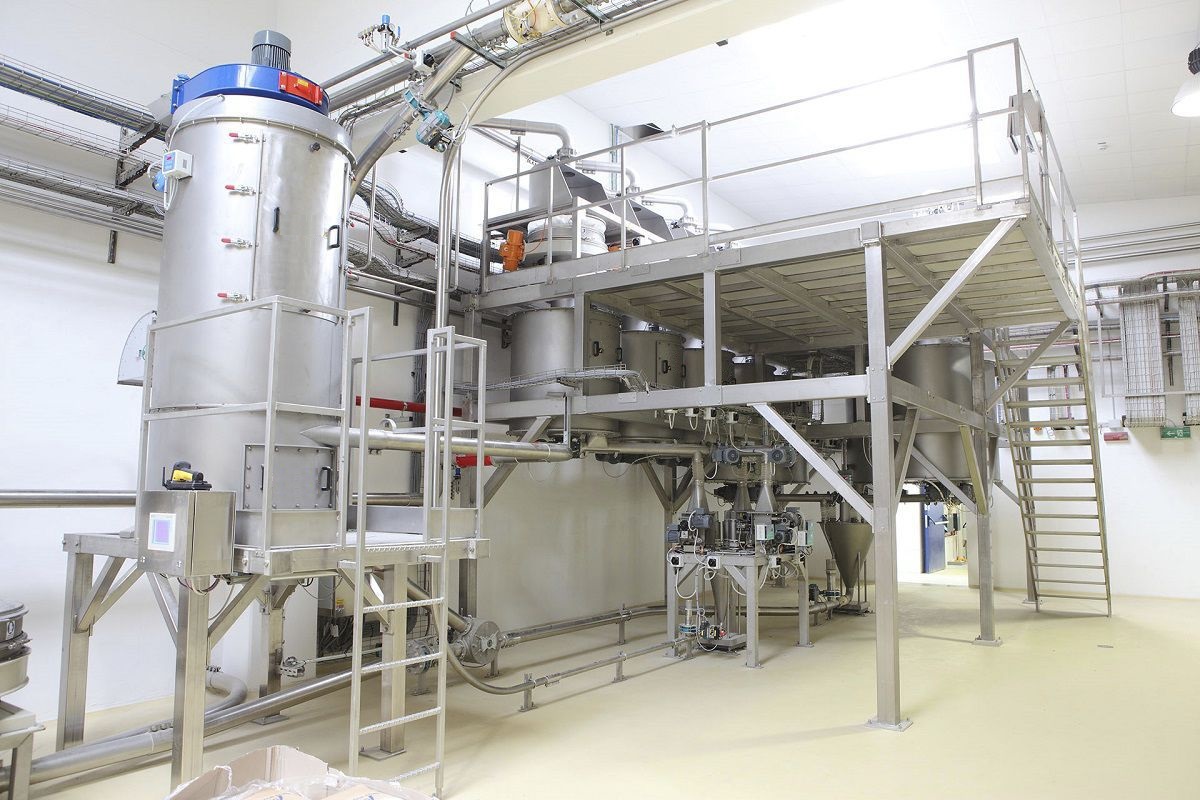
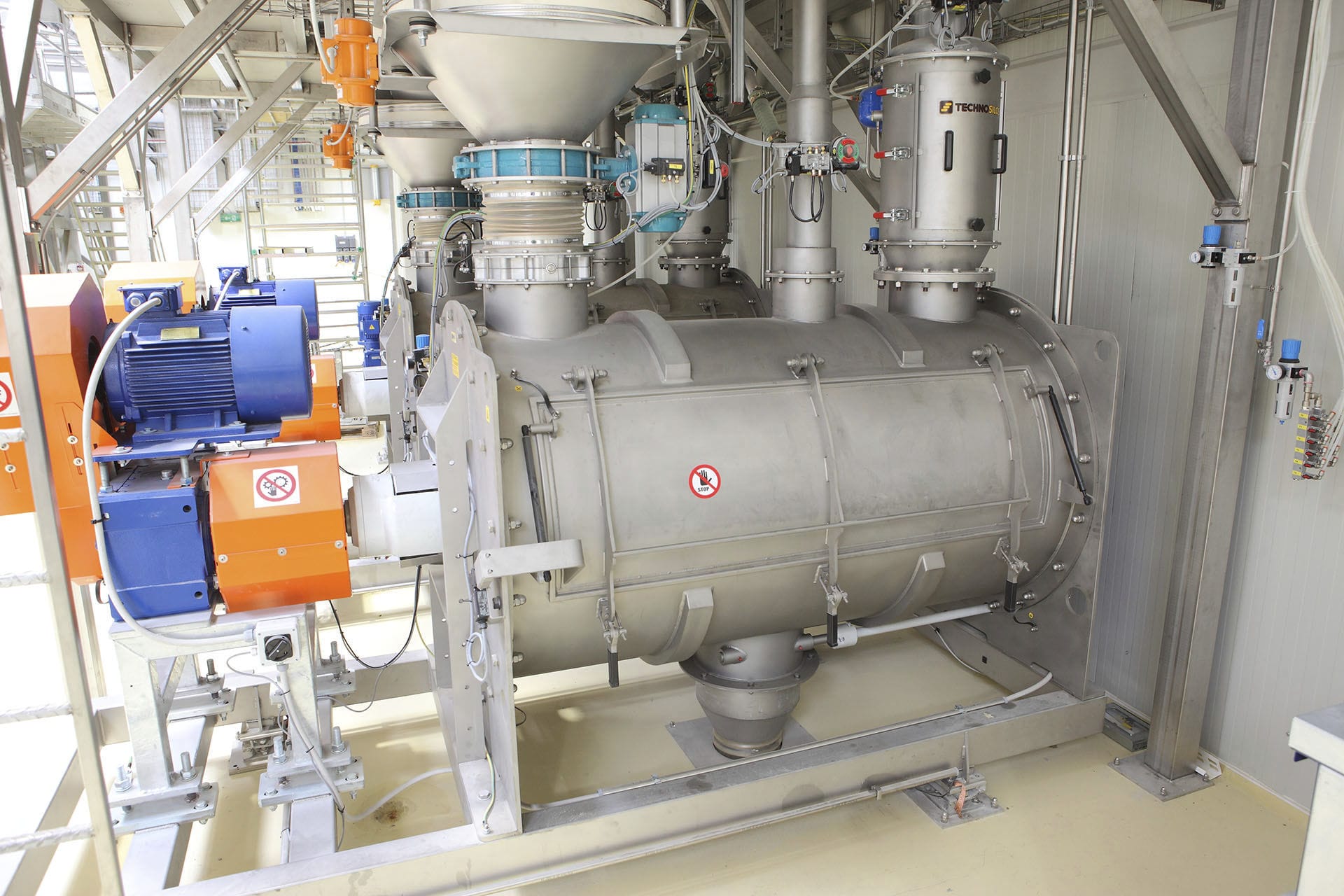
The loop weighing and feeding equipment mainly utilizes the energy of the airflow to transport liquid and powder materials along the direction of the airflow in a closed pipeline. It is a specific application of fluidization technology. The pneumatic conveying device has a simple structure and is easy to operate. It can be used for horizontal, vertical or inclined conveying. During the conveying process, it can also simultaneously carry out physical operations such as heating, cooling, drying and air flow classification of materials, or certain chemical operations. Compared with mechanical conveying, pneumatic conveying systems consume more energy, the particles are prone to damage, and the equipment is more susceptible to abrasion. Materials with high water content, adhesiveness or those prone to static electricity during high-speed movement are not suitable for pneumatic conveying. The main features of pneumatic conveying are large conveying capacity, long conveying distance and relatively high conveying speed. It can load materials at one place and unload them at multiple places. Weighing and batching equipment can solve various problems in metering and mixing. We have many years of experience in the development and production of plastic automatic weighing and batching equipment, as well as numerous practical cases of plastic automatic weighing and feeding equipment.
In the weighing and batching equipment, the formula is first input on the instrument to start batching. When the PLC detects that the scale is in the zero range, it begins to start the slow batching of the first material (only one speed is needed, connected to the instrument's slow batching). After reaching the slow batching quantity, the pneumatic ball valve closes, and the instrument performs an out-of-tolerance detection. After the detection is completed, a delay is applied. Then start preparing the second material, the third material, and the fourth material. After the fourth material is prepared, if there is an over-tolerance, an over-tolerance alarm will be output, and then the instrument will output an unloading signal, waiting for unloading. If a malfunction occurs during the batching process, the instrument batching can be stopped at any time.
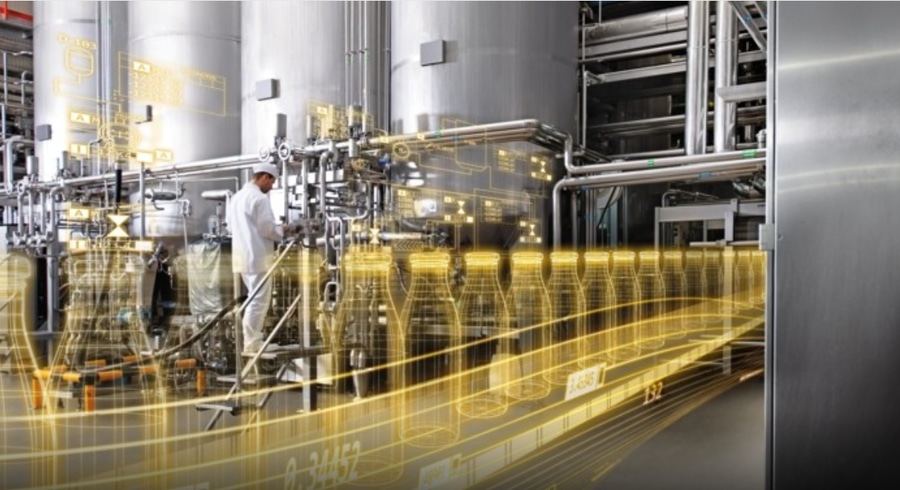
The design of the automatic weighing and batching equipment adopts an HMI+PLC system, integrating multiple load cells and actuators into a powerful weighing and batching control system. It can be applied to various chemical operation units that require precise control and quantitative dosing.
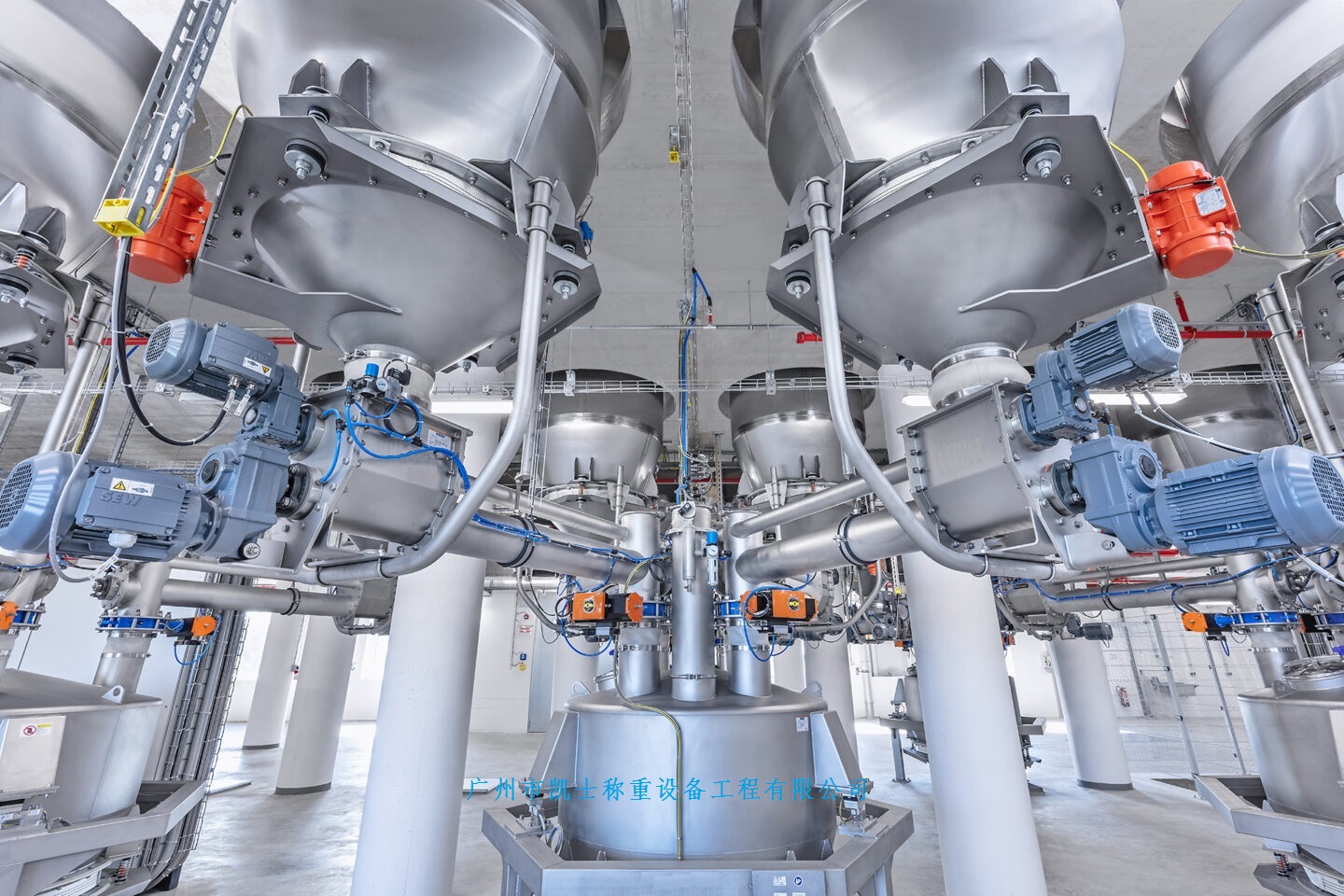
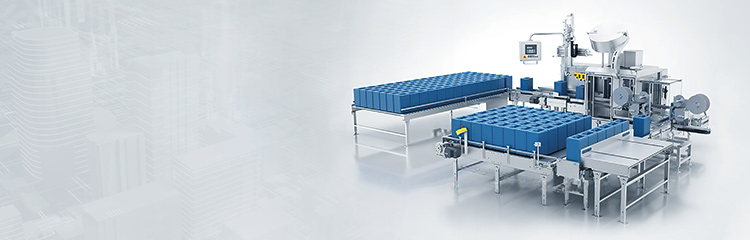
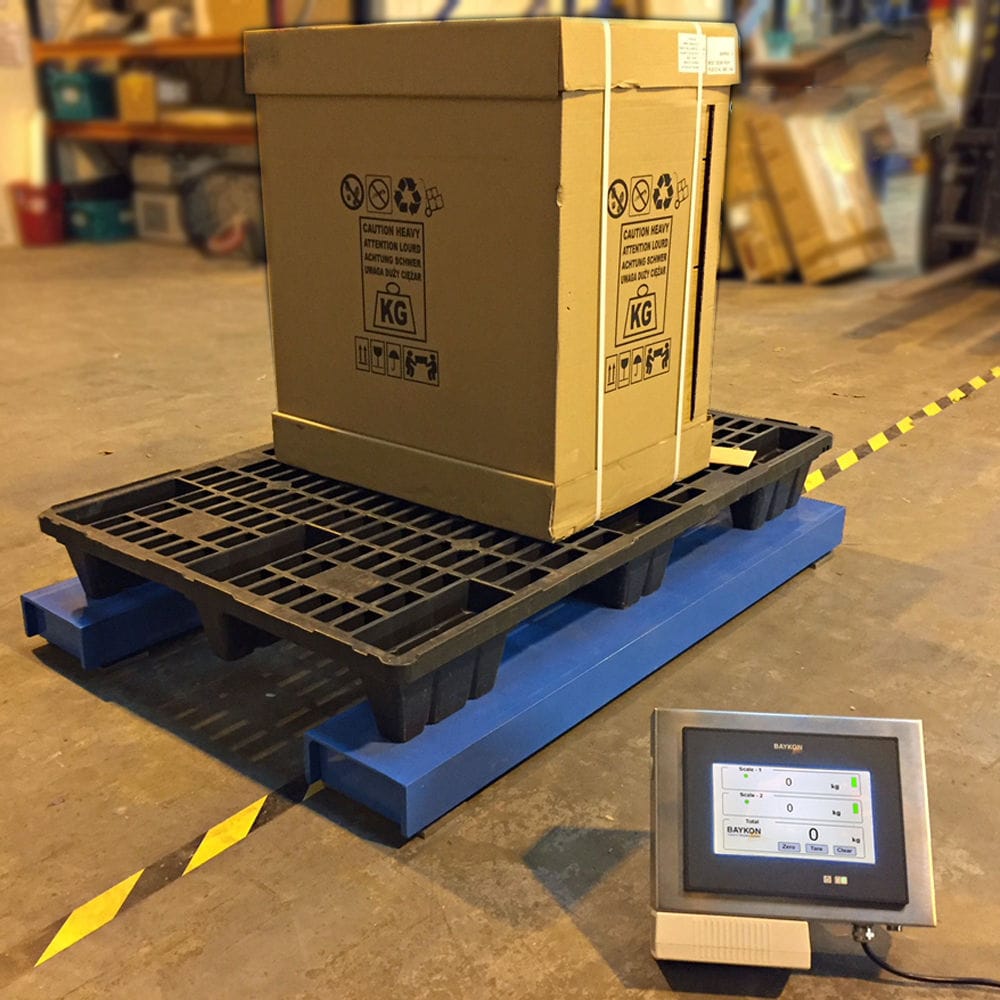
All the equipment of the batching device is centrally installed on a steel base. The entire set of equipment includes a Weighing system, a heating and insulation system, a liquid dosing system and an automatic control system.
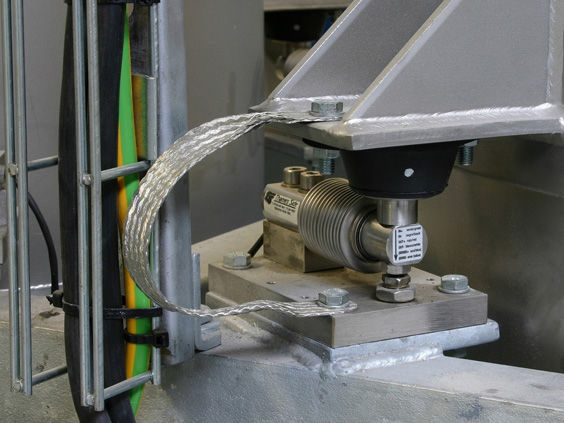
The weighing system consists of a weighing module, a weighing platform, a level regulator and accessories.
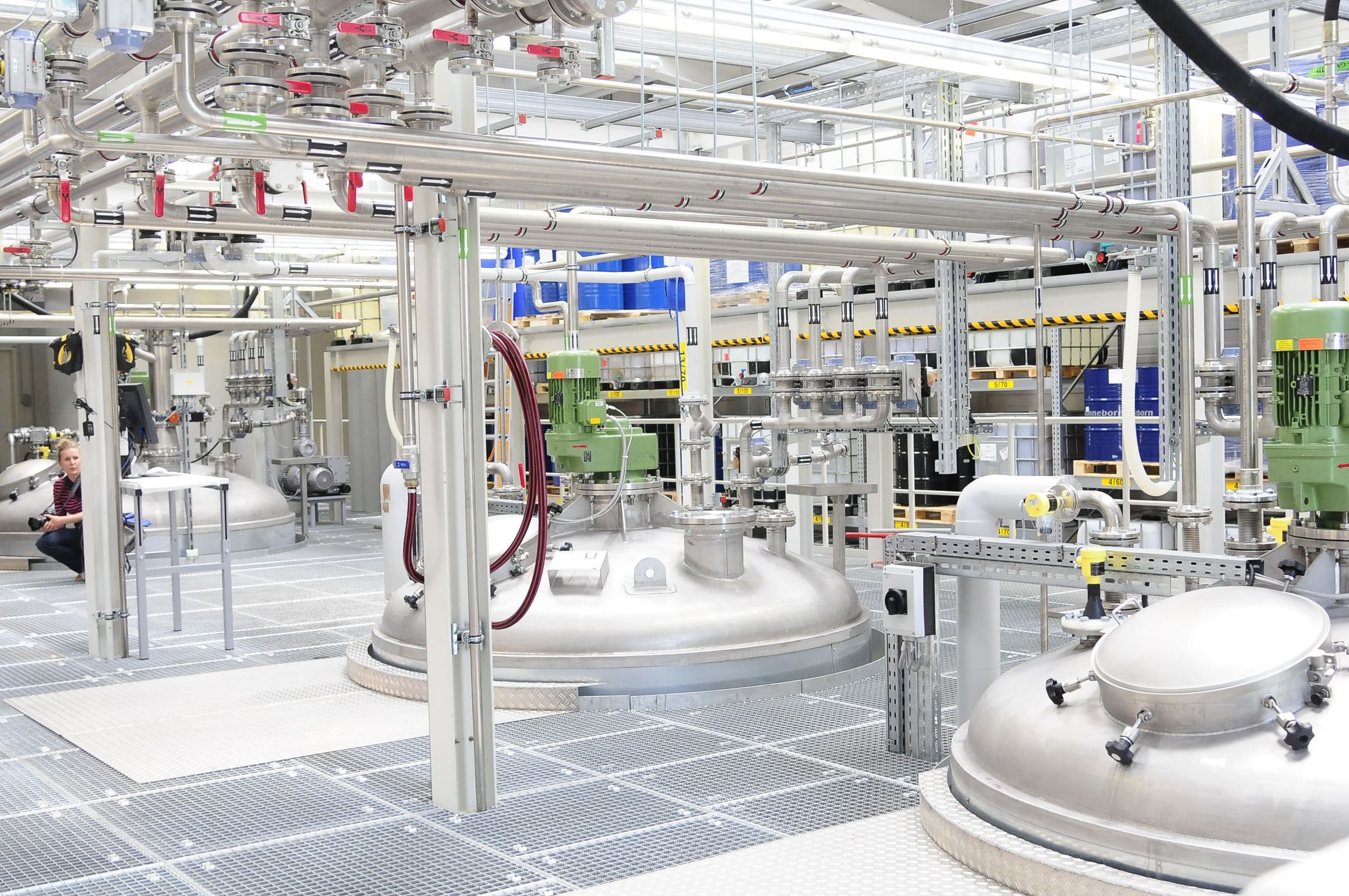
The heating and insulation system consists of storage tanks, agitators, liquid level gauges, solenoid valves and pipelines, etc.
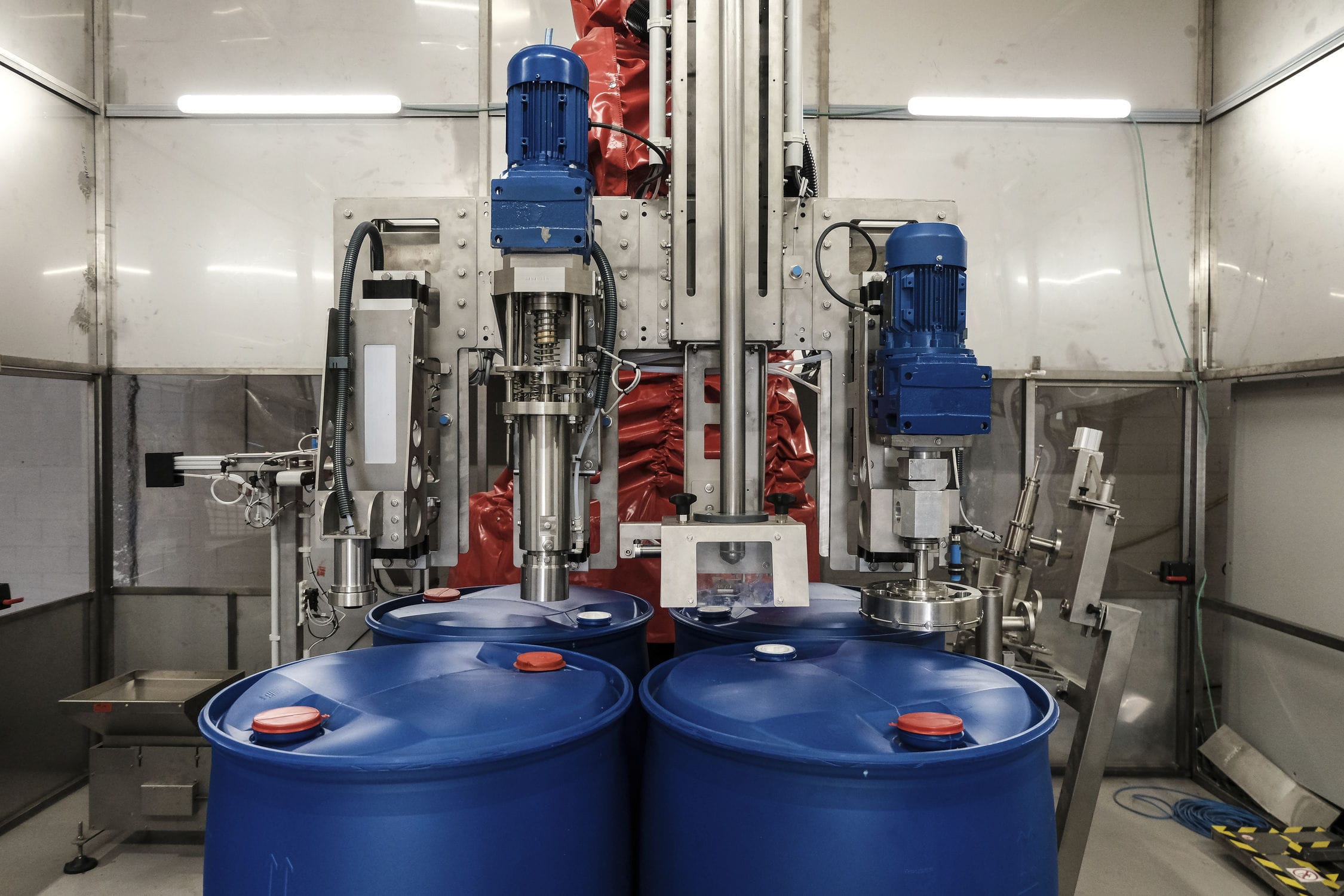
The liquid dosing system is composed of a dosing pump, safety valve, back pressure valve, pulse damper, pressure gauge, ball valve, pipeline mixer, pipelines and accessories.