










The Spiral weighing feeder increases the rotational speed of the main motor through frequency conversion, that is, it changes the speed of the feeder, thereby increasing the feeding rate of the feeder and making the actual feeding rate of the feeder the same as the required feeding rate. When the measured feeding rate is lower than the set value, the speed of the feeder is changed by reducing the rotational speed of the main motor through frequency conversion, thereby reducing the feeding rate of the feeder to meet the requirements of batching in the material tank.

 020-34563445
The Spiral weighing Feeder multiplies the measured weight of the material per unit length of the screw and the running speed of the screw to obtain the actual feeding rate, and then integrates this product value over the time ratio to obtain the actual total feeding weight in tons. The control system continuously compares the actual feeding rate with the preset value of the DCS, and sends the comparison result to the PID for operation. According to the deviation size, it outputs the corresponding signal value. The speed of the motor is changed by the frequency converter to adjust the feeding amount, making it consistent with the set value, so as to achieve the best feeding rate.
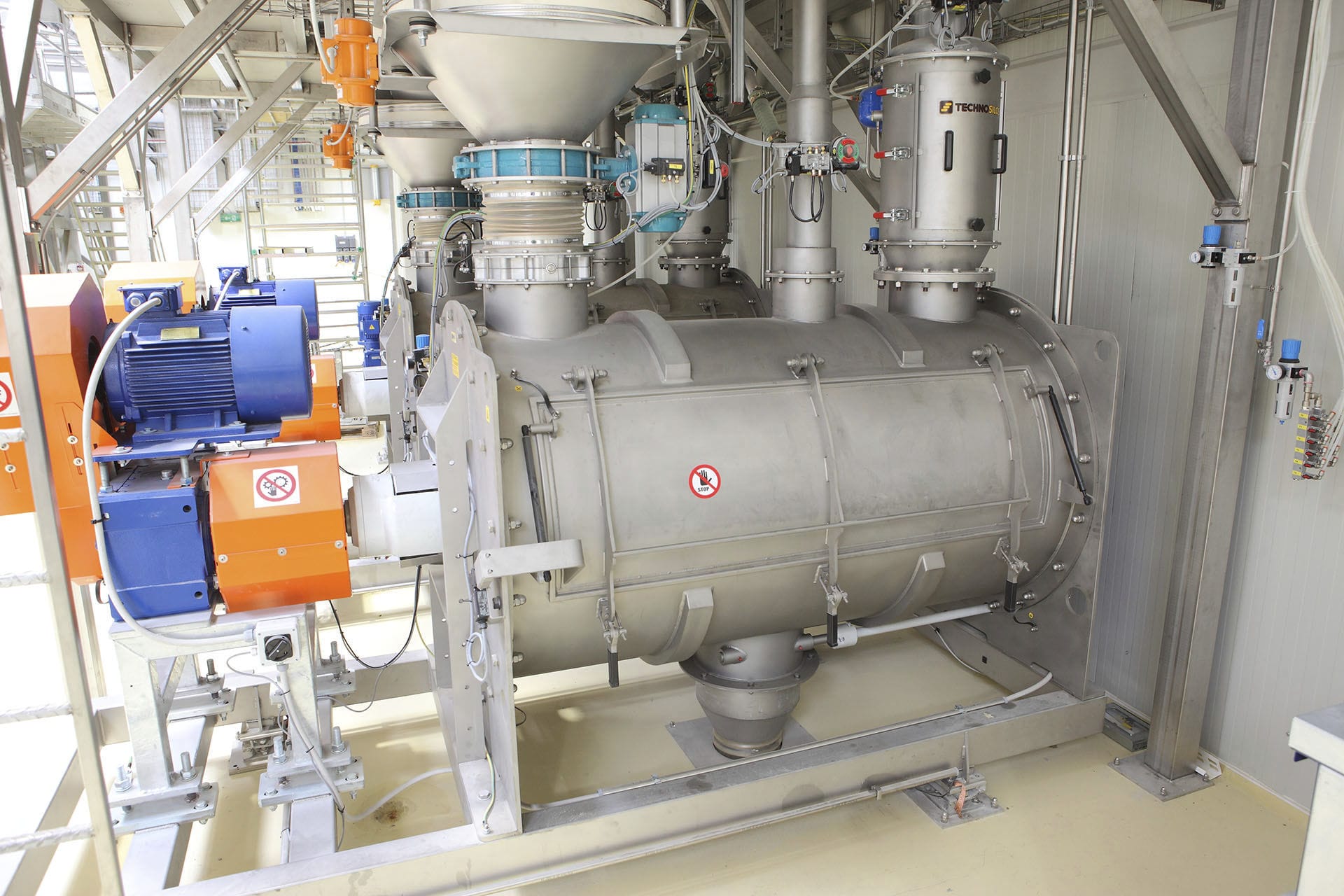
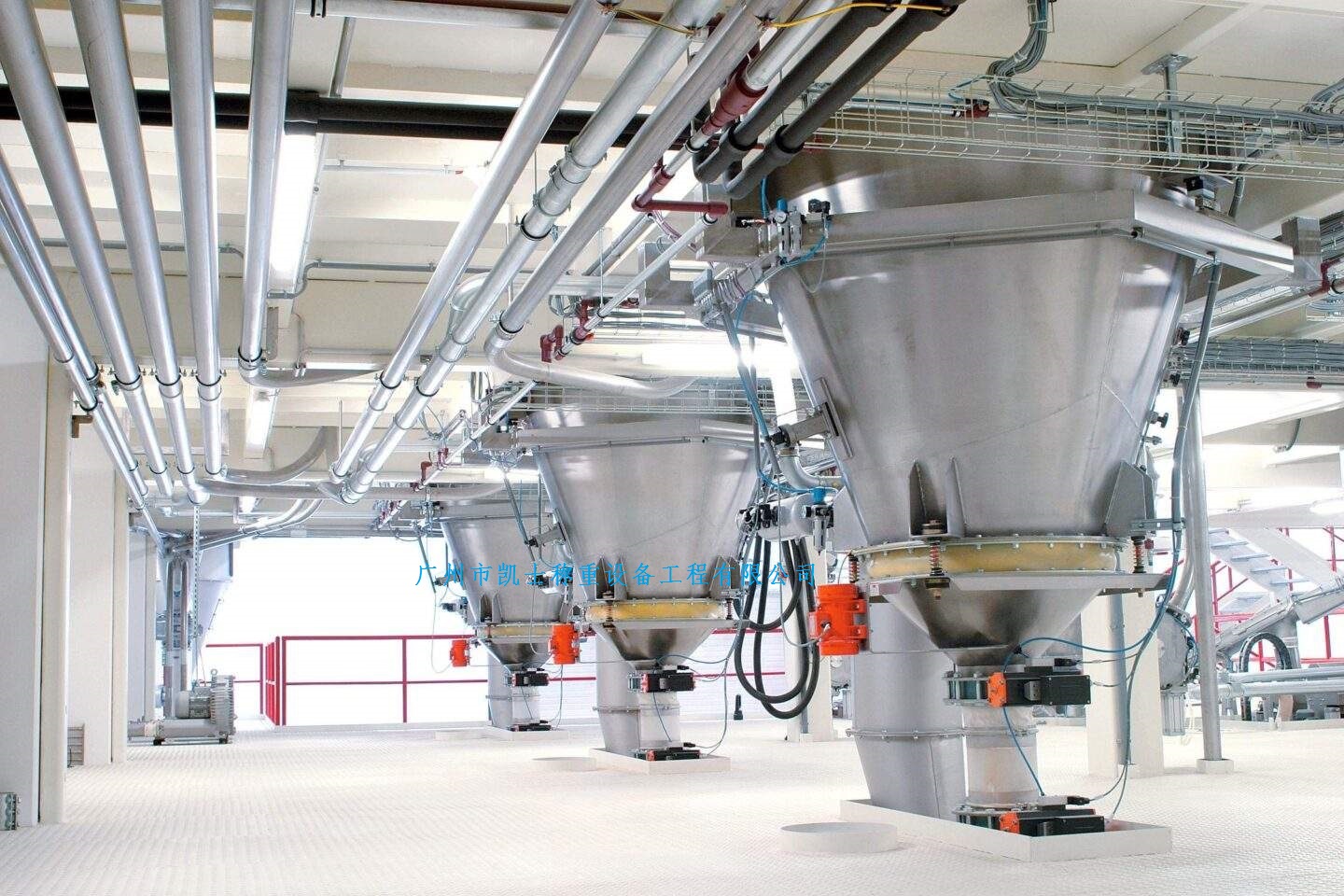
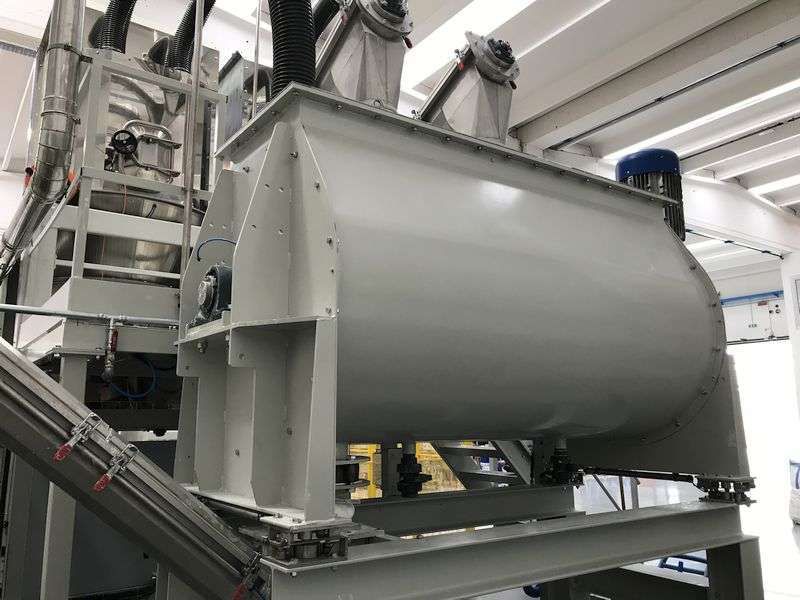
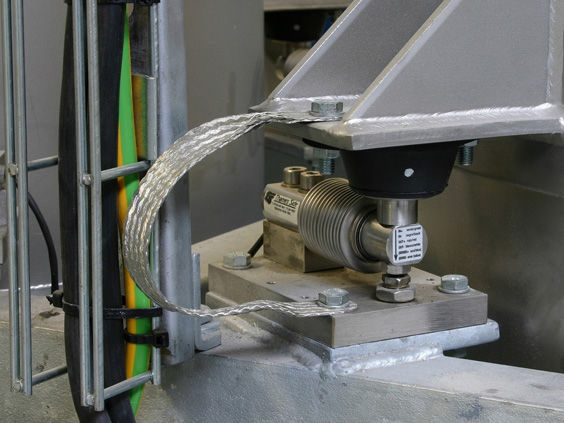
The feeding system starts from the raw material hopper and enters the three feeders through the feeding port. The materials are respectively conveyed to the discharge end by the conveying screws inside the three feeders, fall into the discharge port, enter the falling hopper, and finally reach the screw. Then, they are finally conveyed to the batching machine by the 101" screw, 102" screw, and 103" screw. Among them, the 1# and 3" feeders are mainly responsible for conveying white materials. The 2" feeder is responsible for conveying tobacco materials. Under the conveying screw inside the feeder, there are weighing idlers, weighing levers and weighing module devices. When the material is conveyed and subjected to gravity, the weighing module will generate a voltage signal proportional to the load of the screw and input it into the accumulator. Meanwhile, the speed measurement device installed on the feeder can convert the speed of the conveyor belt into an electrical pulse signal. By amplifying the weight electrical signal and the speed electrical signal and converting them into digital signals through AD, then multiplying the two digital signals and integrating the time, the instantaneous flow value and cumulative weight value can be obtained. The results can also be output as 0-20mA or 4-20mA power supply signals.
While actually measuring the feeding rate, compare this signal with the pre-set feeding rate signal or the feeding rate signal required by the batching control system of the material tank. When the measured feeding rate is lower than the set value, the speed of the main motor is increased through frequency conversion, that is, the speed of the feeder is changed, thereby increasing the feeding rate of the feeder and making the actual feeding rate of the feeder the same as the required feeding rate. When the measured feeding rate is lower than the set value, the speed of the feeder is changed by reducing the rotational speed of the main motor through frequency conversion, thereby reducing the feeding rate of the feeder to meet the requirements of batching in the material tank.