



 2025.12.08


Summary:The grab unloading hopper scale directly calculates the total weight of the material inside the grab, achieving the weighing of the grab on the hopper scale. When the grab teeth plate is fully closed, the grab forms a tight bucket shape, which can be used for material grasping and weighing measurement. When unloading is required, the control mechanism will drive the grab teeth plate to open, and the material will be discharged from the grab. The weighing device and the grab are designed as one.
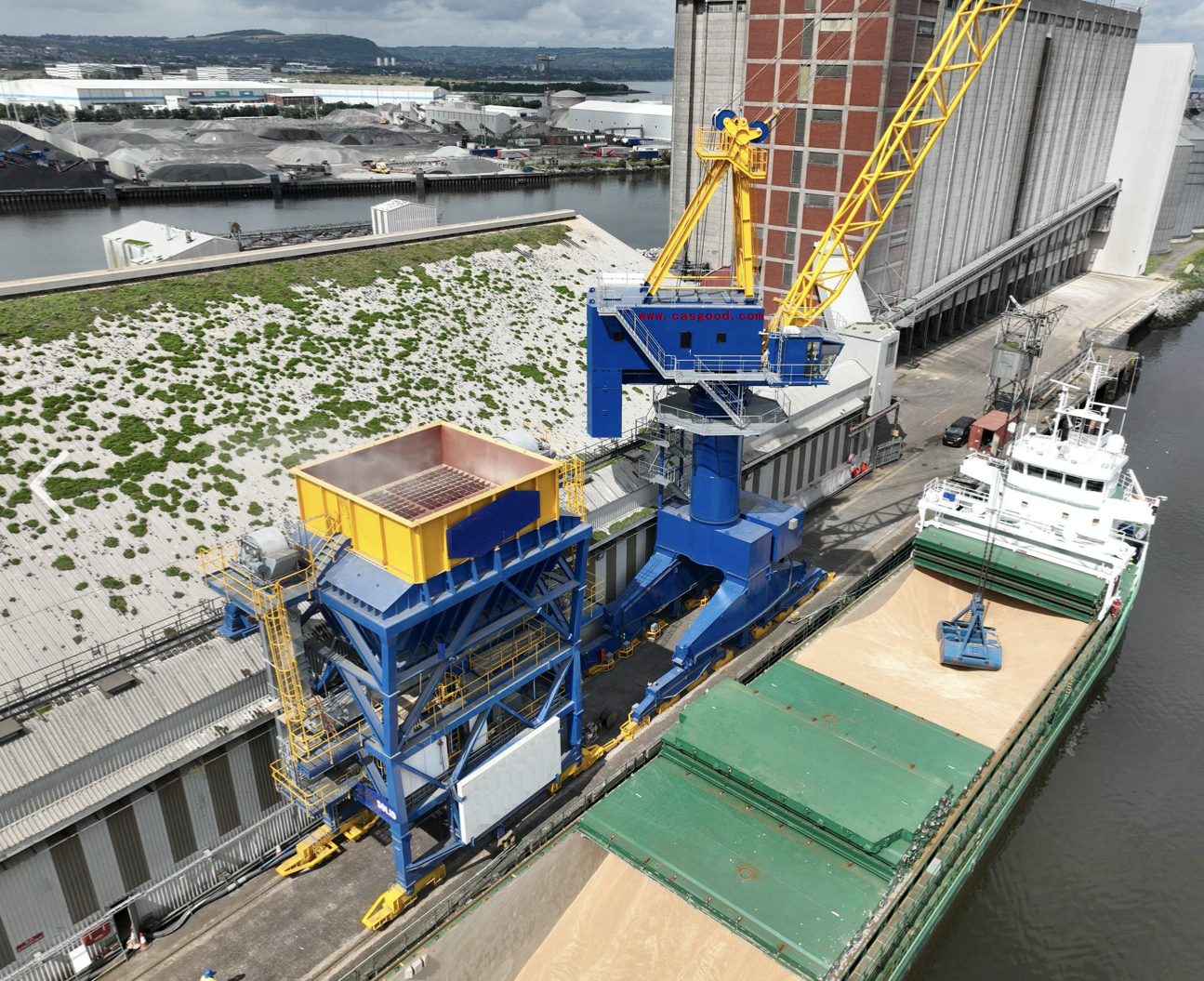
The unloading hopper scale is a computing instrument that integrates weighing, transportation, storage and grab settlement. It is composed of a steel structure support frame, bulk material scale, buffer hopper under the scale, maintenance walkway, signal indication part, automatic scale calibration device, weighing system and computer weighing data management system, etc. The opening and closing actions of the grab are achieved by controlling the opening and closing of the grab's tooth plates. A weighing device is added to the upper bearing beam of the original grab, mainly consisting of the grab body, weighing module, weighing shaft, weighing pulley and guide pulley, etc. There are two weighing modules in total, which are installed on the upper bearing beam, while the weighing shaft equipped with the weighing lifting pulley and the weighing opening and closing pulley is directly placed on the weighing module. The weighing module can simultaneously measure the force of the lifting rope and the opening and closing rope, directly obtaining the total weight of the material in the grab, and achieving the weighing of the grab on the hopper scale. When the teeth plate of the grab is fully closed, the grab forms a tight bucket shape, which can be used for material grasping and weighing measurement. When unloading is needed, the control mechanism will drive the teeth plate of the grab to open, and the material will be discharged from the grab. The weighing device and the grab are designed as one.
The important components of the lifting, opening and closing system of the grab bucket scale mainly consist of two jaw plates, a lower crossbeam, two support rods and an upper crossbeam. The loading and unloading process of the grab is controlled by two sets of steel wire ropes, namely the opening and closing steel wire rope and the lifting rope group. These two sets of steel wire ropes are respectively driven by two independent drums. Such a grab is called a four-rope grab. The operation process of the grab can be divided into four steps: The grab that opens the lowering bucket descends to the material pile. At this time, the opening and closing rope group and the lifting rope group of the grab are released at the same speed. However, during the lowering process of the grab, the self-weight of the grab is borne by the lifting rope group to prevent the grab from automatically closing during the lowering process. At this point, the grab has closed and is inserted into the material pile. The lifting rope assembly remains stationary, while the opening and closing rope assembly begins to wind up, forcing the jaw plate to close and grasp the material. After the grab bucket is fully filled with materials, the lifting rope assembly and the opening and closing rope assembly are wound up at the same speed until the grab is lifted to the predetermined height. When the grab runs above the unloading site, the opening and closing rope assembly is relaxed, while the lifting rope assembly remains stationary and bears the weight of the entire grab. At this point, the jaw plate opens under the combined action of its own weight, the lower crossbeam, and the weight of the material in the grab, thus discharging the material. Then the grab bucket remains open again and enters the second working cycle.
The grab weighing is achieved through torque control. It supports the frequency converter to switch from speed control to torque control. According to the principle and characteristics of torque control, when the weight of the grab exceeds the torque of the supporting motor, the support rope will descend to complete the deep digging action, and it can effectively protect the weighing module. Its working principle is as follows: When the grab grabs the bulk cargo, the lifting rope rises, and the opening and closing rope closes the grab body. The weight of the bulk cargo inside the grab acts on the weighing opening and closing pulley and the weighing lifting pulley through the lifting rope and the opening and closing rope, and then acts on the weighing module through the weighing shaft. The weighing module sends the analog voltage signal to the signal processing device for processing. The analog voltage signal is amplified, filtered, and converted into the corresponding digital signal by A/D. It is then sent to the data processor of the weighing instrument through the wireless data transmission system to perform operations and processing on the digital weight data, obtaining the actual weight value, which is displayed on the digital display screen. If necessary, it can also be printed by a printer, displayed on a large screen monitor or sent to a computer.
The automatic control of the grab unloading hopper scale is accomplished by a programmable logic controller (PLC). During the feeding process, the operator operates the grab to pick up materials from the material pile. The picked materials are placed into the hopper scale. The weight of the materials entering the hopper scale is converted into millivolt-level analog voltage signals by sensors and then sent to the weighing control terminal. The terminal converts this signal into a weight data signal and transmits it to the PLC through serial communication. This data is compared with the preset single-scale target value on the touch screen or computer minus the lead amount (difference). If this weight data is less than this difference, that is, the grab has not been emptied, the feeding output point on the PLC remains connected, the feeding valve remains open, and the feeding process continues. When this weight data reaches this difference, the feed output point on the PLC is disconnected and the feed valve of the scale is closed. When all the materials in the air have fallen into the scale hopper and the scale is stable, the weight data at this time is the actual weight of the materials on this scale. The PLC sends the weight value of this material to the internal accumulator for accumulation, and then the printer prints it out. During the discharging process, the discharging output point on the PLC is automatically connected, the discharging valve opens, and the discharging begins. The discharged materials fall onto the belt conveyor and are fed into the site by the belt conveyor. When the scale hopper is emptied, the discharging valve automatically closes. At this point, the current weighing cycle ends, and the feeding process for the next weighing cycle automatically begins. This cycle continues until the system stops automatically after the final weighing cycle ends.
The hopper scale part is a carbon steel structure composed of the hopper scale body, the discharge door, the weighing module, etc. This part, together with the weighing control section, forms the basic weighing unit of the bulk material scale. The hopper scale is a container used to complete the weighing of materials. The hopper scale body is installed on a steel support frame with four weighing modules through a dedicated connection device. This dedicated connection device can reduce the impact force generated during the falling of materials on the weighing accuracy and ensure the measurement accuracy. Installing anti-collision fences around the entrance of the hopper scale can prevent the grab from directly hitting the hopper scale. Install an isolation fence at the entrance of the hopper scale to prevent large materials or debris from falling into the hopper scale. Installing wall vibrators on both sides of the hopper scale can be used to assist in the unloading of materials inside the hopper scale.
The buffer hopper part under the scale is composed of an unloading hopper, a material level gauge, a manual slide door, a flexible connection interface, etc. The discharge hopper accepts the materials from the hopper scale and gradually empts them. The main structure of the lower bucket of the scale is made of carbon steel, and the inner conical surface part is lined with wear-resistant plates (ultra-high molecular weight polyethylene plates), which can be replaced to extend the wear-resistant life of the equipment. The automatic calibration device is used to meet the needs of installation and commissioning, weighing setting and routine calibration. When it is necessary to calibrate the scale, simply place the loading button on the control console in the "Add" position, and the actuator will act to lift the weights. After the scale calibration is completed, simply place the loading button in the "Unload" position, and the actuator will act in response to lower the weights. The total lifting capacity of the automatic weighing device is designed to be 4 tons, divided into 4 groups, with each group having 1 ton.
The control system mainly consists of the weighing module (included in the hopper scale part), the weighing control box (including the weighing display instrument, programmable controller, touch screen, electrical components, printer), etc. It controls the action of the grab unloading bulk material scale and is the core of the entire bulk material scale measurement. The weighing control box should be placed at an appropriate position on the scale body support frame to avoid rain exposure.
The computer management system is installed in the control room and is set as the communication master station in this system. It is responsible for collecting the weight data of the control system, comprehensively monitoring the operation of the system, and can program the PLC and modify the weighing control parameters through the window software. In addition, it can also analyze, manage the collected data and print related reports, etc.